Class trips are some of the best parts of the school year! But, when it’s time to figure out how to fundraise for a school trip, parents and teachers alike find themselves staring at a daunting budget and wondering where to start.
Between permission slips, parent emails, and the looming cost of buses and museum tickets, it’s easy for organizers to feel overwhelmed before collecting a single dollar.
If this sounds like you, don’t worry! All you need is a clear plan and a handful of creative class trip fundraising ideas to turn planning chaos into a fully funded adventure. This guide will teach you how to raise money for school trips, including a simple step-by-step process for collecting donations online and several tried-and-true field trip fundraising ideas your school community will actually enjoy.
Whether you’re organizing a fifth-grade science center visit or a high school senior trip, you’ll leave with everything you need to hit your goal!
How to Raise Money for a School Trip: Your Fool-Proof Game Plan
Before you launch a delicious school bake sale fundraiser or share a QR code link for that high school trip donation drive, you need a roadmap. These steps will teach you how to fundraise for a school trip in the most organized way possible to keep your fundraising logistics effortless.
Start With a Plan That Keeps Everyone on Track
Great fundraisers begin with clear numbers. These logistics revolve around core questions, like:
- How much money do you actually need?
- What’s your deadline?
- Who’s on your fundraising team?
Answering these questions upfront prevents the mid-campaign scramble that derails so many school fundraisers.
Break your total goal into smaller milestones. If you need $3,000 in eight weeks, aim for roughly $375 per week. Smaller targets feel achievable and give your team reasons to celebrate along the way.
Most importantly, never underestimate the power of a well-structured school fundraising calendar. This tool can help you map these milestones against key dates like paydays and school events.

Bonus idea:
Assign clear roles early. One person handles communications, another tracks finances, and a third coordinates volunteers. Shared ownership means no single organizer burns out.
Choose the Right Field Trip Fundraising Platform
Juggling Venmo requests, cash envelopes, and Google Forms is a recipe for headaches. A purpose-built platform like Cheddar Up consolidates payments, sign ups, and participant info in one place, so you spend less time chasing checks and more time planning the actual trip.
A digital tool like Cheddar Up is extremely easy to use. All you have to do is build a single collection page where families pay online, sign digital waivers, and submit permission slips. No app download or account creation required for parents.
— Andrea, PTA Board Member, Northeast Elementary School
Consider Peer-to-Peer Fundraising for Bigger Reach
Want to expand beyond your immediate parent group? Peer-to-peer fundraising lets every student (and even parents) set up a personal fundraising page that feeds into your main collection.
Think of it like a team sport: everyone contributes, and together you move closer to the goal.
This approach works especially well for older students. When it comes to promoting fundraising ideas for high school trips, students can share their page with grandparents, neighbors, and family friends, building confidence and responsibility in the process. It transforms fundraising from a chore into a learning experience, and kids take genuine pride in knowing they helped make the trip happen.
15+ Best Field Trip Fundraising Ideas
Now that you have the logistics locked down, it’s time to pick your strategy. These school trip fundraising ideas range from zero-effort digital campaigns to high-energy community events. Mix and match based on your timeline, volunteer capacity, and school culture!

Donation Drives: The No Strings Attached Approach
Sometimes the simplest method wins. A straightforward donation drive skips product sales entirely and asks your community to contribute directly toward the trip.
Set up a donation page with your goal, a short description of the trip, and suggested levels ($10, $25, $50). Parents, grandparents, and community members appreciate the transparency, and you avoid the overhead of managing inventory.
Pair the drive with a short video of students explaining why the trip matters. Authentic storytelling raises more money than a generic ask every time.

Product Sales: From Hoodies to Cookie Dough
Product fundraisers remain popular because they give donors something tangible in return. School spirit wear, cookie dough, candles, plants: the options are nearly endless.
Platforms like Cheddar Up let you track information like inventory and item variations (sizes, flavors, colors) right inside the collection, eliminating the need for separate order forms.
The key to a successful product sale is choosing something your community actually wants. Survey parents beforehand, or lean into seasonal trends. A gift card fundraising approach works particularly well because families use the cards themselves, making it feel less like a donation and more like everyday spending.

Ticketed Events: Fun Night, Funded Trip
Talent shows, trivia nights, family bingo, and pizza parties double as community-building experiences and fundraising machines. Sell tickets online through Cheddar Up, then add optional donation tiers at checkout for families who want to contribute a little extra.
Keep costs low by asking local restaurants to donate food or offer discounts. The profit margin on a $5-per-family pizza night with donated pizza is essentially 100%. Plus, these events generate energy and excitement that carries over into other fundraising efforts.

Athons: Every Step (and Page) Counts
Walkathons, readathons, danceathons: the “-athon” fundraising model works because it ties pledges to student effort. Kids feel empowered, sponsors feel involved, and the competitive element keeps participation high.
For a creative twist, host a “mathathon” where students solve problems to earn pledges. Teachers love the academic tie-in, and parents appreciate that screen time isn’t required.

Sponsor a Student: Local Business Partnerships
Local businesses often have community sponsorship budgets they’re eager to spend. Approach coffee shops, dentist offices, and real estate agents with a clear proposal: their logo on trip T-shirts, a social media shout-out, or a banner at school events in exchange for a flat sponsorship amount.
Prepare a one-page sponsorship packet that outlines benefits at different levels ($100, $250, $500). Businesses respond better to specific asks than vague requests, and the partnership often extends to future holiday fundraisers for schools and other events throughout the year.


Class vs. Class Challenges: Friendly Competition, Big Results
So, you want to learn how to fundraise for a school trip in the most fun way possible? Nothing motivates students (and their parents) like a little rivalry!
Set up a class-versus-class challenge where each homeroom competes to raise the most money within a set timeframe. Track progress publicly on a hallway leaderboard or digital display, and award the winning class a small prize like extra recess or a pajama day.
This gamified approach taps into natural competitiveness and social accountability. When students see another class pulling ahead, they rally their networks harder!

Digital "Sponsor-a-Day" Calendar: Visual Progress
This is a gamified donation drive that fosters high-engagement and makes a big goal feel manageable.
So, how does it work?
First, create a digital or physical calendar for the month leading up to the trip. Supporters “buy” a day on the calendar. The 1st of the month costs $1, the 15th costs $15, and the 31st costs $31. If every day is filled, a single student can raise nearly $500. It’s a great visual way for donors to see exactly how they are helping you cross the finish line.

Parents' Night Out: Childcare with a Cause
Give parents a much-needed break while raising funds for the trip. Host a “Parents’ Night Out” at the school gym or cafeteria where teachers and trip-bound students provide themed childcare. Think “Movie Night,” “Lego Mania,” or “Sports Camp.”
Charge a flat fee per child and offer a sibling discount. By providing a valuable service (childcare), you’re making it easy for parents to say yes to the donation.


Chalk the Walk Festival
Turn the school’s sidewalks or parking lot into a temporary art gallery. This is one of the best fundraising ideas for high school trips since many high schools have large student parking lots and driveways!
Sell square sections of the pavement to students, families, or local businesses to decorate with chalk art. You can turn it into a competition with categories like “Most Creative,” “Best Use of Color,” or “Best School Spirit.”
Ask a local business to sponsor the “Best in Show” prize. This keeps your overhead low since the only physical cost is the chalk, and the community gets a beautiful, if temporary, landmark to enjoy.

"Flamingoing" (or School Mascot) Yard Flocking
This prank-style fundraiser is a huge hit for middle and high schools. For a donation, a student “hit squad” moves a flock of pink plastic flamingos (or your school mascot) to a friend’s front yard (or you can flock a classroom!). Parents, teachers, and students who want to flock someone’s yard or classroom pay a fee to have them secretly pranked.


School "The Masked Singer" Competition
Borrowing from the hit TV show, have well-known teachers or local community figures perform a song while wearing elaborate, DIY costumes or masks. Audience members vote for their favorite performer by placing money in jars assigned to each character or through a digital donation link.

Car Wash 2.0: The Pre-Sale Model
Traditional car washes are weather-dependent and risky for planning. Modernize the approach by selling “Car Wash Vouchers” in advance. Whether you host a physical wash on a Saturday or partner with a professional local car wash facility to sell their tickets for a cut of the profit, pre-selling ensures you hit your financial goal regardless of what the weather does on event day.

The "Un-Fundraiser": For the Busy Parent
Sometimes honesty is the best policy. Appeal to the parent who is “fundraised out” with a humorous “Un-Fundraiser.” Create tiers like: “$25: I don’t want to bake anything,” “$50: I don’t want to sell anything to my coworkers,” and “$100: I promise not to send a single email about this trip.”
People appreciate the candor and are often happy to give just to avoid the work of traditional fundraising.

Paint and Sip (Juice Edition): Family Art Night
Host a guided painting session in the school cafeteria or art room. Charge a registration fee that includes a canvas, paint supplies, and “fancy” drinks (like sparkling cider or fruit punch). A talented art teacher or local student artist can lead the group in creating a specific painting, perhaps a landscape of the destination you’re traveling to!
Auction off the “Master Piece” created by the instructor at the end of the night for an extra boost to your trip fund.

Themed Dress Down or Spirit Days
If your school has a strict dress code or uniform policy, “Dollar Dress Down Days” are consistent money-makers.
Students pay a small fee ($1–$5) to wear pajamas, a superhero shirt, or a crazy hat. It’s a high-volume, low-effort win that students look forward to. To maximize results, schedule these monthly leading up to the trip.
Bonus Idea: Used Book or Uniform Exchange
Eco-friendly and practical, this fundraiser provides a service to your school community. Ask families to donate gently used books or outgrown school uniforms, then hold a “pay what you can” sale in the school lobby. It’s a great way to clear out closets while ensuring every student has access to affordable uniforms and reading materials, with all proceeds going toward the trip.
Start Raising Money for Your Class Trip with Cheddar Up
Learning how to fundraise for a school trip is easier than you think. All it takes is a clear goal, the right tools, and a community willing to chip in.
Cheddar Up makes the logistics effortless so you can focus on what actually matters: giving students an unforgettable experience outside the classroom. Watch how easy Cheddar Up can be and set up your school trip fundraiser in minutes.
Join a Live Learning Session
Want hands-on guidance? Check out our Cheddar Up Learning Sessions for free, expert-led tips on how to fundraise for a school trip.

Frequently Asked Questions
How can I make the trip more affordable for families who cannot contribute financially?
Create a confidential scholarship option funded by sponsors or a portion of general donations, and let families request assistance through a private form. You can also offer non-monetary ways to help, such as volunteering time or providing in-kind supplies, so every family can participate with dignity.
What is a realistic fundraising timeline for a school trip, and when should I start?
Start as soon as the trip is approved, ideally 8 to 12 weeks before deposits or ticket deadlines. Build in extra time for collecting forms, coordinating vendors, and handling late payments without last-minute stress.
How do I set suggested donation amounts without making anyone feel pressured?
Use optional giving levels framed as “help cover one student activity” or “support transportation costs,” and always include a custom amount and a clear “any amount helps” message. Adding a non-financial support option (like sharing a link or volunteering as a chaperone) keeps the ask inclusive.
What are some low-cost school trip fundraising ideas that boost participation without eating into funds?
Offer experience-based rewards like a dress-down day, front-of-line lunch pass, or a classroom celebration donated by parents. Recognition works too, think thank-you wall posters, morning announcements, or a “top helpers” spotlight.
What should we do if we raise more money than we need for the trip?
Decide in advance and communicate the policy clearly, such as applying excess funds to scholarships, future field trips, or classroom supplies related to the trip. If possible, get the plan approved by school leadership to avoid confusion and ensure accountability.
How can we keep fundraising communications effective without overwhelming parents and teachers?
Use a single source of truth page for updates, then send short, scheduled messages that always include one clear action. Rotating who sends updates (teacher, PTO, student leader) and using consistent subject lines also improves visibility without increasing volume.

Before you go
Ready to start raising funds for your class trip with ease? When you use Cheddar Up to collect payments for your school trip, you are sure to simplify your fundraising efforts so you can set out on big classroom adventures faster.
You may also like:

Last-Minute Teacher Gift Ideas for the Holidays and the Last Day of School
You need teacher gift ideas, stat. Lucky for you, the gift teachers want most takes almost no effort. (Hint: it’s a gift card.)
The last-minute teacher gifts below work for winter break and the end of the school year, and none of them look last minute. Each one can turn into a class gift you pull together quickly.
The fastest last-minute teacher gift is a group gift card. Families pay through one link, and you give the teacher one gift instead of a stack of small ones. We surveyed teachers across grade levels about what they’d most like to receive, and 85% picked gift cards. If you’re stuck on a store, start with the gift cards teachers ask for most.
Cheddar Up is an online tool groups use to collect money and information. You can build a collection page in less than a minute and set a per-person amount, or let families choose what to give. Text the link to the class, and parents can pay right away without an app or an account.

10 Booster Club Fundraising Ideas + Easy-to-Use Templates
According to Cheddar Up’s 2026 State of Booster Club Fundraising survey, 59% of the 125 booster club leaders surveyed say the programs they support are underfunded or have limited funding. That’s where booster club fundraising comes in.
To help you raise more, we’ve rounded up fundraising ideas based on what booster club leaders say works best. From tried-and-true favorites to fresh ideas, you’ll find plenty of inspiration to make your next fundraiser a success. The best booster club fundraisers do two things: get families excited to participate and raise money without overwhelming your volunteers. That could mean selling spirit wear, hosting an event, or securing local business sponsors. The goal is to support your program while keeping fundraising efforts manageable. (New to booster clubs? Check out our guide to what a booster club is.)
Bake sale sign up sheet template + planning tips
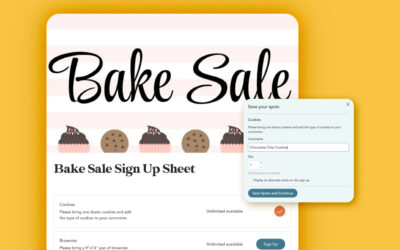
We know how much you love planning a bake sale fundraiser and making things run smoothly, so today we’re serving up a fresh-baked treat just for you. If you’ve ever hosted a bake sale, you know the sign up sheet can make or break the day. A good bake sale sign up sheet gets the right mix of treats on the table and enough volunteers behind it.
That’s where this guide comes in. Below you’ll find a free online template and a quick setup walkthrough, plus ideas for what to include in your sale. Start here. Our free bake sale sign up template works for any school, team, troop, or church group, and you can have it live in a few minutes.
A bake sale sign up sheet is a shared list where people can choose what they’ll bake, bring, or help with. When it’s online, you can keep track of goodies, supplies, and volunteer shifts all in one place, so you always know who’s bringing what.

Booked Authors streamlines school book sales with Cheddar Up
As Executive Director of Booked Authors, Allyson Hickey oversees school book sales tied to author visits across the country. Many of those sales happen at the same time, often with tight timelines and high expectations from schools, PTAs, and families.
For years, the process relied on paper order forms sent home in backpacks, checks returned on uneven schedules, and handwritten personalization details that were not always easy to read. Tracking orders required follow-up, and even small errors created extra work during already busy seasons.
As school book sales grew in volume, the cracks became harder to ignore. Managing multiple author visits and book orders at once left little room for inefficiency. Allyson knew the process needed to support growth without adding more manual work.
Tags: